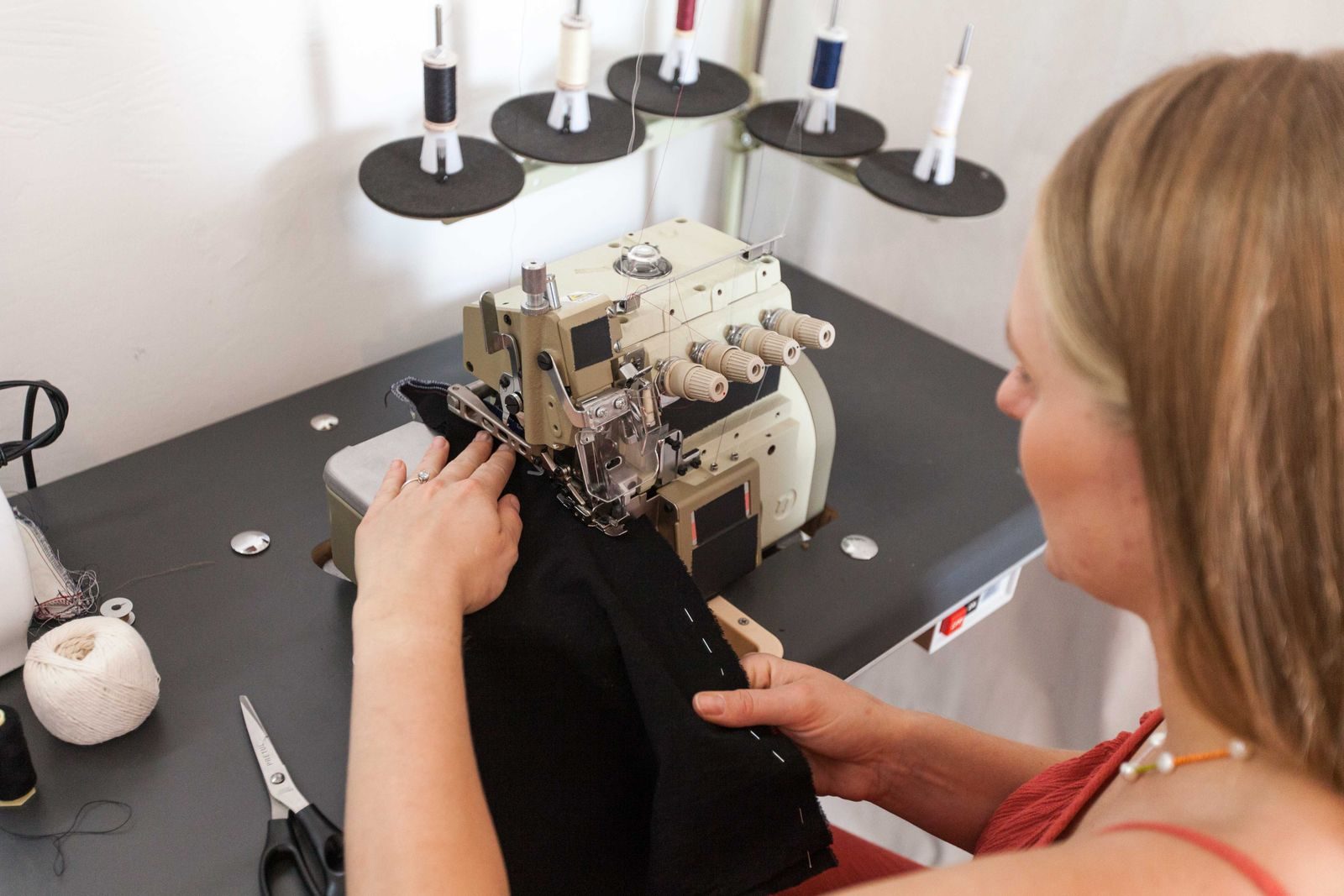
Accounting for manufacture of gents' and boys' underwear without the stress: how it works
NOGA code 141401 · MANUFACTURING
Accounting for manufacture of gents' and boys' underwear rests on three pillars: federal law that applies across Switzerland, cantonal deadlines worth knowing, and tools that eliminate re-keying. This guide puts it all in order, fact by fact.
The Swiss legal frame for accounting
Three documents summarise the health of a Swiss business: the balance sheet (what it owns), the income statement (what it earns) and the notes (what else you should know). All the work of accounting converges on those three pages.
Also worth knowing: accounts may be drawn up in the currency most relevant to the business; if that is not the franc, values must additionally be stated in CHF (art. 958d para. 3 CO). Internationally active companies gain books that match their economic reality.
Outsource accounting or keep it in-house?
Outsourcing accounting to a fiduciary frees up time and secures compliance; keeping it in-house preserves a continuous view and costs less in fees. The best answer is often hybrid: the company captures and digitises as it goes, the fiduciary supervises, closes the books and represents the company before the authorities.
With a shared online platform, collaboration works remotely, documents and entries visible to both sides in real time. The choice widens to all of Switzerland — competence becomes the criterion again, not the postcode.
A Swiss SME's accounting calendar
Every deadline has an owner: an obligation “of everyone” is kept by no one. Naming one person per deadline family (VAT, payroll, taxes) closes the gaps.
For accounting, deadline discipline is worth real money: default interest on late VAT, AHV adjustments, tax fines. A shared deadline calendar — fed by up-to-date figures — remains the simplest safeguard.
A well-structured SME chart of accounts
The same chart serves three readings: accounting (accuracy), tax (accepted adjustments) and management (margins by activity). Modern software produces all three views without double entry.
For accounting, the right granularity is decisive: enough accounts to steer the business (margins by activity, expenses by nature), few enough that every entry finds its place without hesitation. The VAT accounts (input VAT, VAT due) deserve special care — they are the basis of the annual reconciliation.
Digitalising accounting: what actually works
Security is part of digitalisation: named access, tested backups, encryption of sensitive data. A digital accounting file is protected like a safe — because it is one.
The real gain of digitalised accounting shows day to day: no paper pile at month-end, VAT prepared continuously, and an owner reading today's figures rather than last quarter's.
Frequently asked questions
What are the legal obligations for accounting in Switzerland?
The foundation is the Code of Obligations: proper bookkeeping (art. 957a CO), annual accounts (balance sheet, income statement, notes) and 10-year retention of books and records (art. 958f CO). VAT applies from CHF 100,000 of turnover, and social insurance settlements from the first employee.
When must a business register for VAT?
As soon as its worldwide annual turnover reaches CHF 100,000 (CHF 250,000 for non-profit sports or cultural associations). Below that, voluntary registration remains possible and often makes sense to reclaim input VAT on investments.
What is the difference between a limited and an ordinary audit?
The ordinary audit applies to companies exceeding, for two consecutive years, two of three thresholds: CHF 20 million balance sheet total, CHF 40 million revenue, 250 full-time positions. Others fall under the limited audit, and those with no more than ten full-time positions on annual average can opt out with all shareholders' consent.
Can accounting be automated with AI?
Largely, yes: automatic document reading, posting suggestions, bank reconciliation via QR references and VAT exports. Human approval remains essential — AI prepares, the professional checks. That is exactly how MyFiducia.ai approaches accounting.
Professions in the same sector
- Production and preserving of meat (except poultry meat)
- Production and preserving of poultry meat
- Production of meat and poultry meat products
- Processing and preserving of fish, crustaceans and molluscs
- Processing and preserving of potatoes
- Manufacture of fruit and vegetable juice
- Other processing and preserving of fruit and vegetables
- Manufacture of oils and fats
- Manufacture of margarine and similar edible fats
- Manufacture of fresh dairy products
- Manufacture of cheese
- Other milk processing
This guide by municipality
Also worth reading
Switch to accounting that keeps itself up to date
MyFiducia.ai automates accounting for Swiss SMEs: AI-read documents, posting suggestions, VAT and exports ready for your fiduciary. Try the platform or browse our other guides.
The application is operated in French.
Source: NOGA 2008 nomenclature, Swiss Federal Statistical Office (FSO). A statistical nomenclature: it describes an activity and is not a commercial register entry.